Postjudgment motions can affect the court’s power to act
Texas Rule of Civil Procedure 329b governs motions for new trial and motions to modify, correct or reform judgments in district and county courts, with the stated exclusion for Rule 316 motions to correct the record. It addresses filing, amended motions, overruling by operation of law and the trial court’s plenary power to change its judgment.
Follow the signed judgment and the disposition of timely motions
Subsection (a) sets the filing period for a new-trial motion. Subsection (c) addresses a motion not determined by a timely signed written order. Subsections (d) and (e) distinguish the court’s initial period of plenary power from the period that follows timely new-trial motions. Read these provisions together rather than assuming every motion extends every deadline.
Changes to a judgment have further consequences
Subsection (f) addresses relief after plenary power expires, including its stated exceptions. Subsection (g) addresses motions to modify, correct or reform, and subsection (h) addresses appeal timing after changes to a judgment. The two illustrations trace these different stages; they are not a calculation of the deadline in a particular case.
The illustrated guide
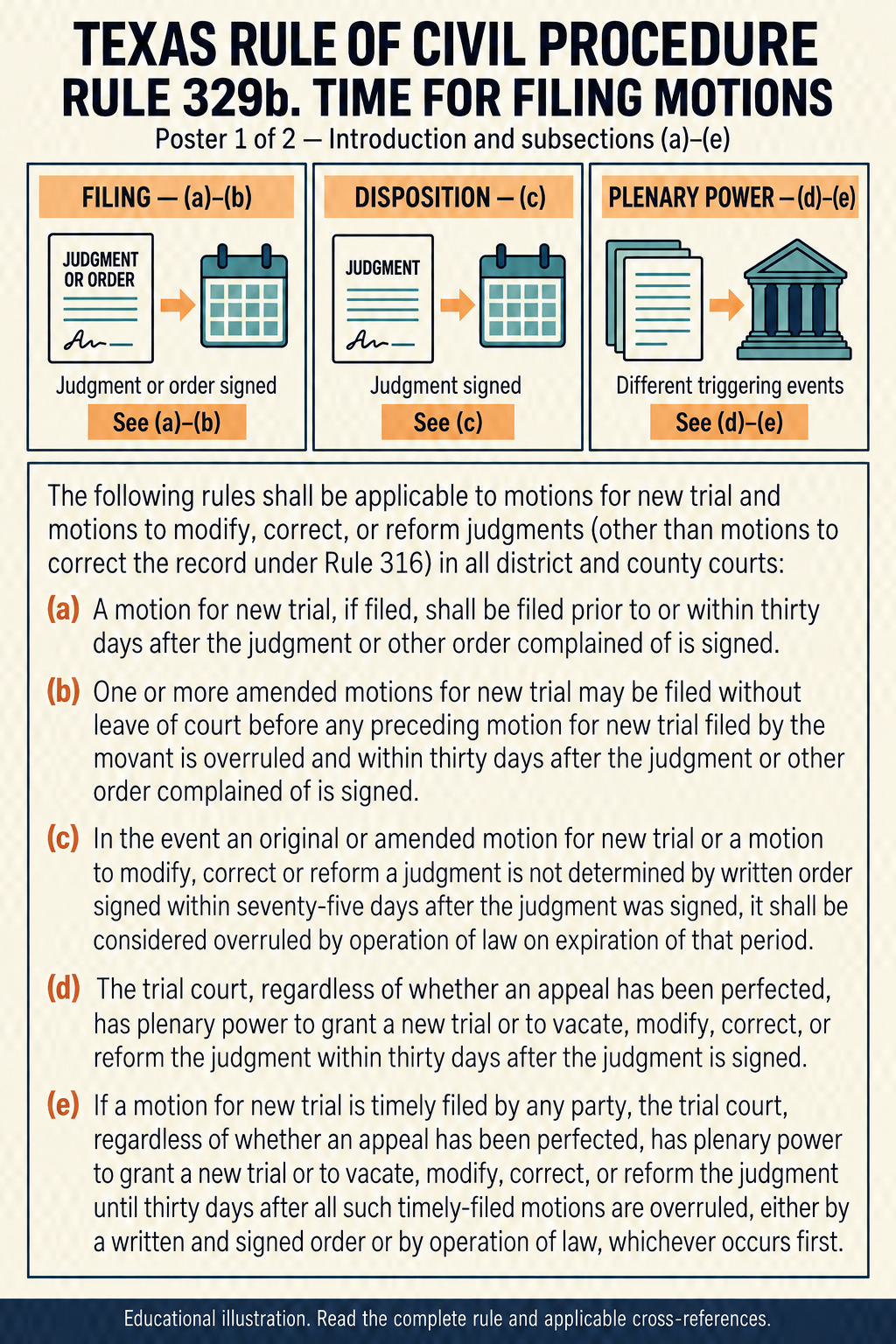
Subsections (a)–(e)
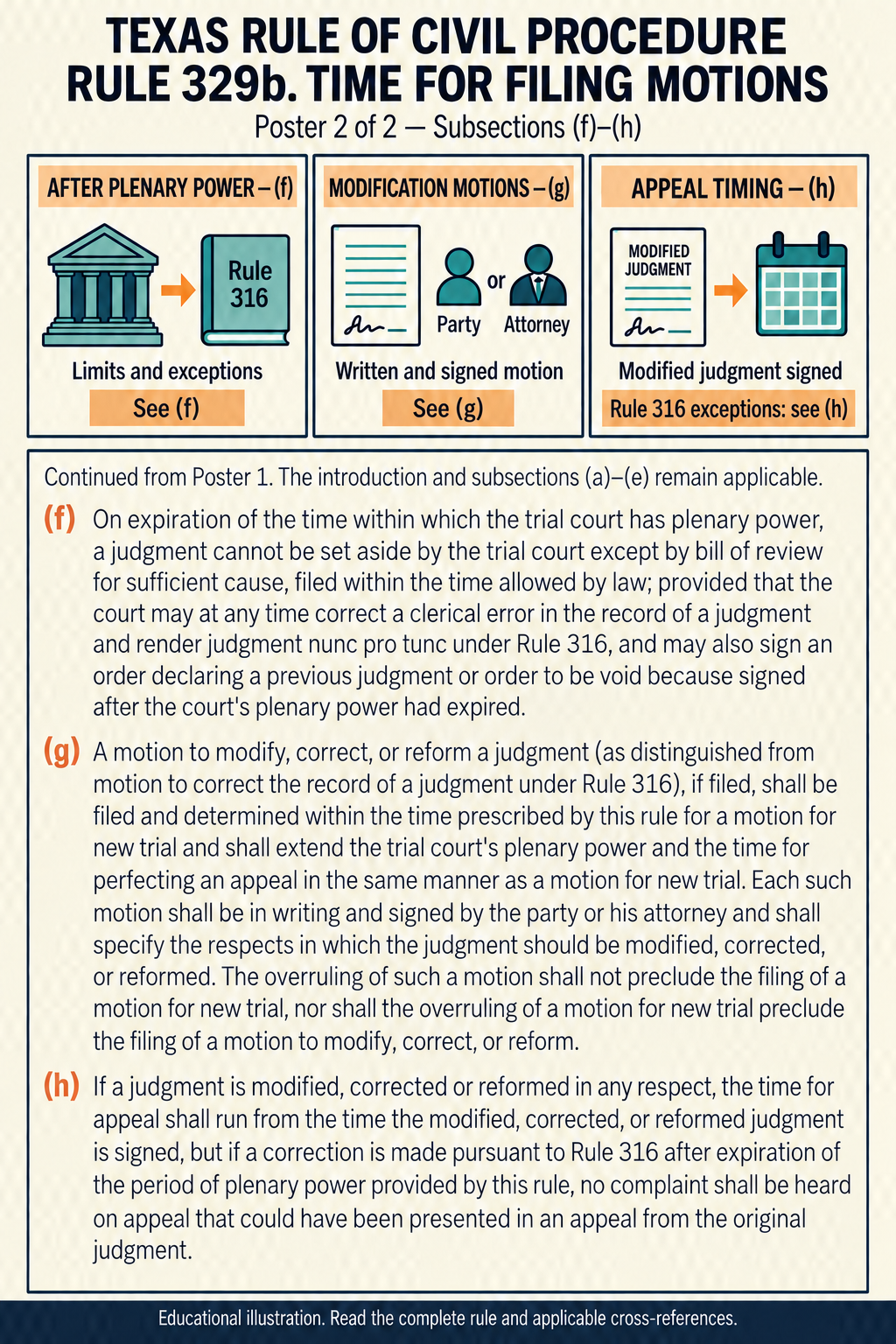
Subsections (f)–(h)